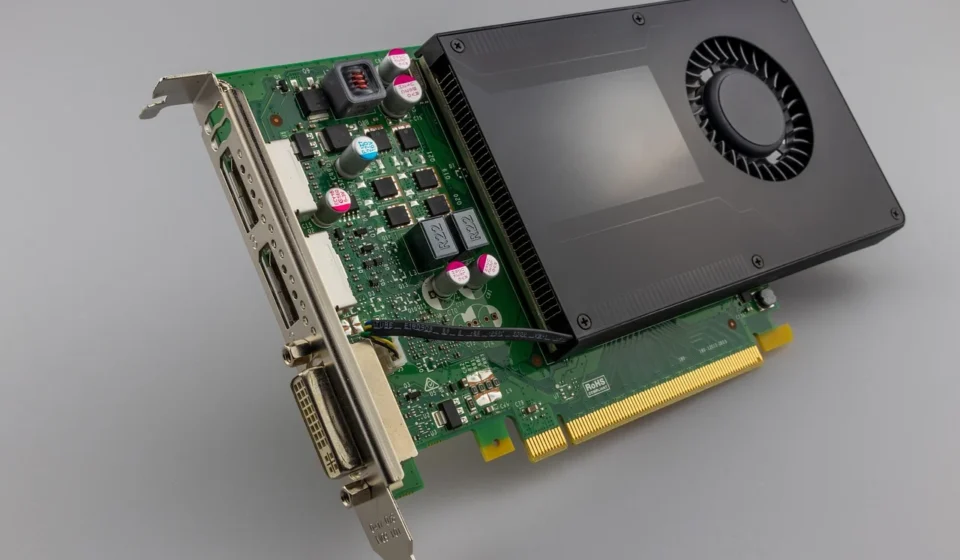
The NVIDIA GeForce RTX 4080 Super remains a highly capable graphics card for 4K gaming, creative workflows, and AI applications in July 2026. Yes, it maintains over 60 FPS in demanding 4K titles. The card offers a strong price-to-performance ratio compared to the RTX 4090, making it a powerful choice for the foreseeable future.
Built on the Ada Lovelace architecture, featuring 16GB of GDDR6X VRAM, DLSS 3.5, and third-generation RT Cores, this GPU effectively handles high-resolution rendering and ray tracing. Below, we break down its detailed performance. We compare it to relevant cards, review power and cooling requirements, and highlight ideal use cases.
Is the 4080 Super still good in 2026? Understanding its Longevity
Yes, the 4080 Super is very much still good in 2026. Its core architecture and feature set provide excellent longevity for demanding tasks. You can expect continued high performance in a wide range of applications.
NVIDIA’s Ada Lovelace architecture, combined with 16GB of fast GDDR6X VRAM, forms a robust foundation. This allows the card to handle modern game engines and complex creative projects with ease. The efficient design means it delivers strong performance without excessive power consumption.
Is the 4080 Super future-proof for gaming beyond 2026?
The 4080 Super is well-positioned for future gaming. Its 16GB VRAM, coupled with DLSS 3.5 and strong ray tracing hardware, means it can handle upcoming titles at high resolutions and settings for several years. While new flagships will always emerge, the 4080 Super’s feature set provides excellent longevity, especially with AI upscaling advancements.
DLSS 3.5, with its Frame Generation and Ray Reconstruction technologies, significantly extends the card’s lifespan. You enable higher frame rates and enhanced visual fidelity in supported games. This means you can play newer, more graphically intensive titles at acceptable performance levels even as they push hardware boundaries.
For gamers targeting 1440p or even high refresh rate 4K, the 4080 Super offers a premium experience. It delivers smooth gameplay in most current and near-future AAA titles. You will likely only need to adjust some settings downward in the most demanding, unoptimized games several years from now.

4080 Super vs 4080: How much better is the 4080 Super over the 4080?
The RTX 4080 Super offers a moderate, but noticeable, performance uplift over the original RTX 4080, primarily due to more CUDA cores and a slight clock speed increase. NVIDIA also launched the Super variant at a lower price point than the original 4080’s MSRP, enhancing its value proposition.
- CUDA Cores: The 4080 Super features 10,240 CUDA cores compared to the 4080’s 9,728. This 5% increase contributes directly to higher raw processing power.
- Memory: Both cards have 16GB of GDDR6X VRAM on a 256-bit memory bus. The 4080 Super’s memory is slightly faster, offering 23 Gbps compared to 22.4 Gbps on the original 4080. This translates to a higher memory bandwidth (736 GB/s vs 716.8 GB/s).
- Clock Speeds: The 4080 Super typically has slightly higher boost clock speeds, further contributing to its performance edge.
- Performance Gain: You can expect the 4080 Super to be approximately 3-5% faster than the original 4080 in most gaming and application benchmarks. In some specific, VRAM-intensive or highly optimized scenarios, this difference might slightly extend.
For someone choosing between the two today, the 4080 Super is the clear winner due to its slightly better performance and more attractive launch price. However, if you already own an RTX 4080, the performance difference is not significant enough to warrant an upgrade.
Understanding the NVIDIA RTX 4080 Super: Specifications and Design
The RTX 4080 Super is a high-end graphics card designed for peak performance. It uses NVIDIA’s Ada Lovelace architecture, bringing significant advancements in efficiency and processing power.
4080 SUPER Specs: Key Technical Details
Here’s a breakdown of the core specifications for the RTX 4080 Super:
| Feature | Specification |
|---|---|
| Architecture | Ada Lovelace |
| CUDA Cores | 10,240 |
| Tensor Cores | 320 (4th Gen) |
| RT Cores | 80 (3rd Gen) |
| VRAM | 16GB GDDR6X |
| Memory Interface | 256-bit |
| Memory Speed | 23 Gbps |
| Memory Bandwidth | 736 GB/s |
| Boost Clock (Reference) | 2.55 GHz |
| Total Graphics Power (TGP) | 320W |
These specifications enable the 4080 Super to deliver exceptional performance in demanding applications. This includes high-refresh-rate 4K gaming to complex AI model training.
Design Considerations: FE, ROG Strix, and ASUS White Variants
The 4080 Super comes in various designs, including NVIDIA’s Founders Edition (FE) and custom cards from partners like ASUS (e.g., ROG Strix, ASUS White). You choose a card based on aesthetics, cooling performance, and factory overclocking.
- 4080 SUPER FE (Founders Edition): NVIDIA’s reference design typically features a sleek, dual-axial flow-through cooler. It often represents the MSRP pricing and provides a premium build quality.
- ROG 4080 SUPER / 4080 SUPER ROG Strix White: ASUS ROG Strix cards are known for aggressive styling, robust triple-fan cooling solutions, and often higher factory overclocks. The “White” variants offer a distinct aesthetic for themed builds. These cards generally run cooler and quieter than reference designs under load. They also tend to be larger and more expensive.
- Other AIB Models: Other manufacturers like MSI, Gigabyte, Zotac, and PNY also offer their custom designs. These vary in cooler size, fan configuration, RGB lighting, and factory overclocks. Always check reviews for specific models to understand their thermal and acoustic performance.
When selecting a card, consider your case size, desired noise levels, and aesthetic preferences. Larger coolers generally offer better thermal performance but require more physical space within your PC case.
System Requirements and Compatibility for the 4080 Super
Integrating a high-performance GPU like the 4080 Super requires attention to other system components to ensure optimal performance and stability.
How much power does the 4080 Super typically draw?
The NVIDIA RTX 4080 Super has a Total Graphics Power (TGP) of 320W. This means the card itself can draw up to 320 watts under full load. NVIDIA recommends a minimum 750W power supply unit for a system featuring the 4080 Super. This ensures stable operation and provides adequate headroom for other components.
When selecting a PSU, look for reputable brands and an 80 PLUS Gold or Platinum certification for efficiency and reliability. You should also ensure your PSU has the necessary 12VHPWR connector (or adapter for older PSUs) to power the 4080 Super. It uses the PCIe Gen 5 power standard.
What kind of CPU should I pair with a 4080 Super?
For the 4080 Super, you should aim for a modern, high-performance CPU to avoid bottlenecks. Recommended processors include Intel Core i7 or i9 (12th generation or newer) or AMD Ryzen 7 or Ryzen 9 (5000 series or newer). The exact model depends on your budget and specific workload. A strong CPU ensures the GPU can operate at its full potential.
A CPU bottleneck occurs when your processor cannot feed data to the GPU fast enough. This prevents the GPU from reaching its full utilization. While this is less common at 4K resolutions where the GPU is typically the limiting factor, a powerful CPU still contributes to overall system responsiveness and higher minimum frame rates, especially in CPU-intensive games or creative applications.
Are there any specific cooling recommendations for the 4080 Super?
While most AIB models come with strong air coolers, ensuring good case airflow is critical. Use a case with mesh front panels and install multiple intake and exhaust fans. Monitoring GPU temperatures and potentially adjusting fan curves in software like MSI Afterburner can help maintain optimal operating temperatures. This is especially true during extended heavy loads.
For high-end GPUs like the 4080 Super, maintaining good temperatures is not just about preventing thermal throttling. It also contributes to the longevity of the card and quieter operation. Consider a case with ample space and good cable management to prevent airflow obstructions.
Performance and Use Cases: Gaming, Creative Work, and AI
The 4080 Super excels across a variety of demanding applications, making it a versatile choice for power users.
Can the 4080 Super handle AI and machine learning tasks?
Yes, the 4080 Super is highly capable for AI and machine learning tasks. Its fourth-generation Tensor Cores significantly accelerate AI inference and training workloads. Its 16GB of VRAM allows for processing moderately sized models and datasets. For many researchers and developers, it offers a strong balance of performance and cost-effectiveness compared to the 4090 or professional-grade GPUs.
You can use the 4080 Super for tasks like training smaller neural networks, running large language models (LLMs) locally, image generation with Stable Diffusion, and accelerating data science workflows. The combination of Tensor Cores and sufficient VRAM makes it a valuable tool for personal and small-scale professional AI development.
What’s the main difference between 4080 Super and 4090?
Next, the main differences lie in raw core count, VRAM, and memory bus width. The RTX 4090 has significantly more CUDA cores (16,384 vs 10,240), more VRAM (24GB vs 16GB), and a wider memory bus (384-bit vs 256-bit). This translates to a notable performance advantage for the 4090, particularly in extreme 4K scenarios, heavy ray tracing, and very large AI models.
This performance difference justifies its higher price for users who demand the absolute best, or whose workloads (like professional 3D rendering, very large AI model training, or competitive 4K gaming at ultra settings with ray tracing) genuinely benefit from the extra power and VRAM.
Is upgrading from an RTX 30 series card to the 4080 Super worthwhile?
Upgrading from an RTX 30 series card like a 3070, 3070 Ti, or even a 3080 to the 4080 Super can offer a significant performance boost, especially for 4K gaming and access to DLSS 3.5 with Frame Generation. Users coming from a 3080 Ti or 3090 might see a smaller, but still noticeable, uplift in specific scenarios, particularly with ray tracing enabled.
For example, if you are moving from an RTX 3070, you can expect a generational leap in performance, often doubling frame rates in modern titles, especially at higher resolutions. From a 3080, the gain is more modest but still substantial, particularly with ray tracing enabled and the benefits of DLSS 3.5. Consider your current card, resolution, and desired frame rates when deciding if an upgrade is worthwhile.
Who the 4080 Super is NOT for
While the 4080 Super is an excellent card, it is not the ideal choice for everyone. Consider these points before purchasing:
- Budget-Constrained Users: If your budget is tight, the 4080 Super’s price point might be too high. More affordable options like the RTX 4070 Super or AMD’s mid-range cards offer excellent value for 1080p or 1440p gaming.
- Casual 1080p Gamers: For gaming exclusively at 1080p, the 4080 Super is overkill. You will not fully utilize its power, and a less expensive GPU will provide similar frame rates at this resolution.
- Users Needing Absolute Top Performance: If you require the absolute best performance for professional workloads or competitive 4K gaming without compromise, the RTX 4090 remains the superior choice, despite its higher cost.
- Existing RTX 4080 Owners: The performance gain from an original RTX 4080 to the Super variant is too small to justify an upgrade.
The NVIDIA GeForce RTX 4080 Super remains a powerhouse GPU in 2026, perfectly suited for those seeking a premium gaming experience at 4K or significant acceleration for creative and AI workloads. Its blend of Ada Lovelace architecture, DLSS 3.5, and strong ray tracing capabilities ensures it can tackle the most demanding applications for years to come. For anyone looking for high-end performance without stepping into the ultra-premium territory of the RTX 4090, the 4080 Super offers a compelling and practical solution.
Source: Wired
Related guides
Frequently Asked Questions
Is the 4080 Super still a good graphics card in July 2026?
Yes, the NVIDIA GeForce RTX 4080 Super remains a highly capable graphics card in July 2026. It is well-suited for 4K gaming, creative workflows, and AI applications. It maintains over 60 FPS in demanding 4K titles due to its Ada Lovelace architecture and features like DLSS 3.5.
What are the ideal use cases for the 4080 Super?
The 4080 Super is ideal for a premium gaming experience at 4K. It also offers significant acceleration for creative and AI workloads. It provides a strong balance of performance and cost-effectiveness for researchers and developers in AI and machine learning tasks.
Does the 4080 Super support ray tracing?
Yes, the 4080 Super effectively handles ray tracing. It features third-generation RT Cores. These are designed to accelerate ray tracing performance, making it capable of delivering high-resolution rendering with advanced lighting effects.
What is the recommended power supply for the 4080 Super?
NVIDIA recommends a minimum 750W power supply unit for a system featuring the 4080 Super. This ensures stable operation. It also provides adequate headroom for the card’s Total Graphics Power (TGP) of 320W, as well as other system components.
Will the RTX 4080 be available in 2026?
While the original RTX 4080 may have limited new stock in 2026 as it has been superseded by the 4080 Super, the RTX 4080 Super itself is widely available and supported. When searching for a “4080” in 2026, you will primarily find the “4080 Super” model.