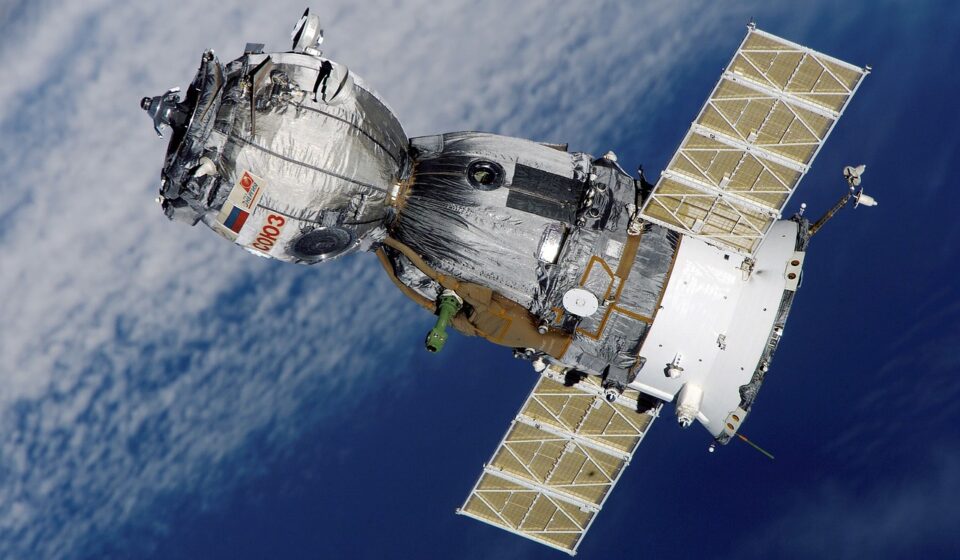
Demand assigned multiple access (DAMA) is a satellite and wireless communication protocol that dynamically allocates bandwidth on demand from a central resource pool. When a user node requests a channel, the network assigns specific carrier frequencies or timeslots for that active session and reclaims them immediately after transmission ends to maximize spectral efficiency.
In traditional broadcast systems or fixed point-to-point topologies, dedicated channels sit idle whenever a site stops sending data. I consider static channel reservation one of the primary drivers of wasted transponder capacity. DAMA solves this inefficiency by treating frequencies, timeslots, and code sequences as shared resources. Instead of assigning a fixed slice of spectrum to every ground station permanently, the system evaluates incoming requests in real time and provisions radio frequency channels only for the precise duration of a call or data burst.
How does demand assigned multiple access allocate network bandwidth?
Demand assigned multiple access allocates bandwidth through a formal request, assignment, and release cycle managed over a dedicated control channel. When a remote terminal needs to transmit voice, video, or data, it formats a request signal containing destination metadata and bandwidth requirements. This request travels over a shared control frequency to a central network control system or Master Earth Station.
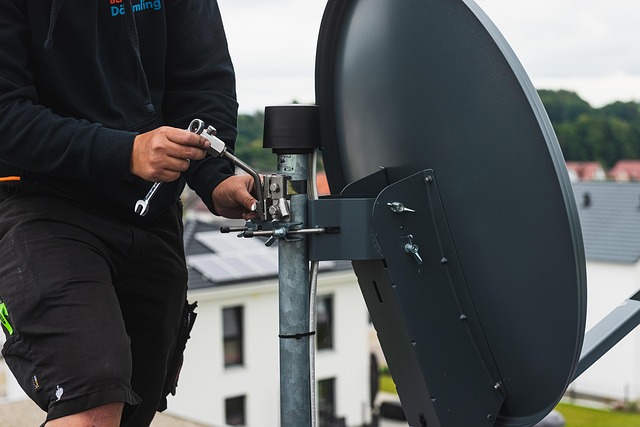
According to the official Demand Assigned Multiple Access documentation, channels are typically managed as paired carrier frequencies—one dedicated to transmit and one to receive—though they can also take the form of specific timeslots inside a Time Division Multiple Access (TDMA) burst plan. Once the central controller receives a remote node’s request, it selects an open carrier pair or timeslot from the central pool and transmits an assignment grant back to the origin and destination terminals.
Both stations automatically tune their modems to the assigned carrier parameters and establish a direct point-to-point link. The nodes hold full control of those specific transmission frequencies for the entirety of the active session. As soon as one party hangs up or the data transfer finishes, the terminal sends an end-of-transmission signal. The central management station updates its directory, marks those frequency pairs as available, and places them back into the pool for reassignment to other nodes in the network.
How does DAMA compare to Permanently Assigned Multiple Access (PAMA)?
The primary alternative to demand assigned multiple access is Permanently Assigned Multiple Access (PAMA). Under PAMA, satellite transponder frequencies or ground channels are hard-coded to specific endpoints regardless of whether those links actively carry traffic. I view PAMA as similar to renting a leased physical phone wire between two offices, while DAMA operates like a dial-up trunk where resources are pooled for many users.
Choosing between DAMA and PAMA depends on duty cycle, traffic predictability, setup latency, and transponder costs. PAMA eliminates channel setup signaling, offering near-zero call initiation delay, but it causes significant capacity waste if user terminals transmit sporadically. DAMA requires extra signaling exchange prior to link establishment, introducing setup delay, but it dramatically increases the number of client terminals a single satellite transponder can comfortably serve.
| Evaluation Criteria | Demand Assigned Multiple Access (DAMA) | Permanently Assigned Multiple Access (PAMA) |
|---|---|---|
| Bandwidth Utilization | High efficiency; pools unused bandwidth for active terminals | Low efficiency; idle channels consume reserved spectrum |
| Call/Session Setup Time | Requires signaling delay (typically 0.5 to 2 seconds over GEO links) | Instantaneous; channel path is pre-established |
| Network Scalability | High; supports hundreds of transient client terminals per transponder | Low; limited directly by total physical channel capacity |
| Control Architecture | Complex; requires central controller or distributed reservation hardware | Simple; minimal control signaling or dynamic routing hardware |
| Cost per Operational Node | Low long-term bandwidth cost; higher upfront hardware complexity | High ongoing lease cost per node due to locked transponder space |
What channel assignment methods are used in DAMA architectures?
Demand assigned multiple access networks implement dynamic allocation using several underlying physical layer access techniques. The specific choice depends on whether the network handles voice traffic, bursty internet packets, or heavy media streams.
Single Channel Per Carrier (SCPC/DAMA)
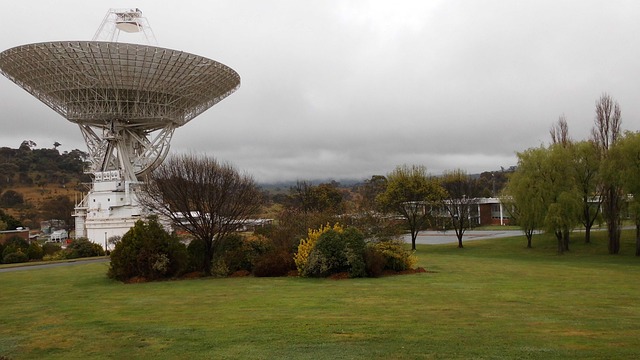
In Single Channel Per Carrier DAMA, each assigned channel consists of a distinct RF carrier frequency pair tuned to the user’s explicit bandwidth requirements. When a call triggers, the control system allocates an exact sub-band within the satellite transponder. SCPC/DAMA excels at uncompressed digital voice or continuous file transfers because once established, the transmission path experiences zero contention or packet jitter from other ground stations.
Multi-Frequency Time Division Multiple Access (MF-TDMA)
MF-TDMA combines frequency hopping with timed time-slot allocation. Rather than assigning a fixed frequency pair for several minutes, the central controller allocates dynamic time slots across several distinct frequency carriers. This allows client terminals to burst short data packets across varying frequencies during designated time frames. I recommend MF-TDMA configurations when building networks dominated by internet browsing, telemetry data, or interactive enterprise IP applications.
What are the main trade-offs and signal delays in DAMA systems?
While demand assigned multiple access solves transponder capacity limitations, it introduces trade-offs in physical signal latency and hardware control overhead that engineers must account for during network design.
Because geostationary (GEO) satellites sit roughly 35,786 kilometers above the Equator, a single round-trip signal from a ground terminal to the satellite and back to a central controller takes approximately 240 to 280 milliseconds. In a centralized DAMA system, setting up a new channel requires a multi-step exchange:
- Step 1: The remote node transmits a bandwidth reservation request packet to the controller (250 ms propagation delay).
- Step 2: The central controller processes the request, checks frequency availability, and broadcasts the channel grant assignment (250 ms propagation delay).
- Step 3: The source and destination modems tune their synthesizers to the designated frequency or timeslot and initialize link synchronization.
This setup sequence adds a minimum of 500 milliseconds of latency before actual voice or payload data transmission can begin. For continuous telephone calls or batch transfers, a half-second setup lag is completely imperceptible to users. However, for real-time control systems or high-frequency automated telemetry, that initial delay can disrupt mission-critical operational requirements.
Who should avoid using demand assigned multiple access?
DAMA is tailored specifically for transient, low-duty-cycle, or highly distributed ground networks. However, there are clear architectural scenarios where I recommend avoiding DAMA in favor of static or packet-switched link models:
- Continuous high-throughput trunking: A fixed PAMA link or static carrier is simpler and cheaper to maintain.
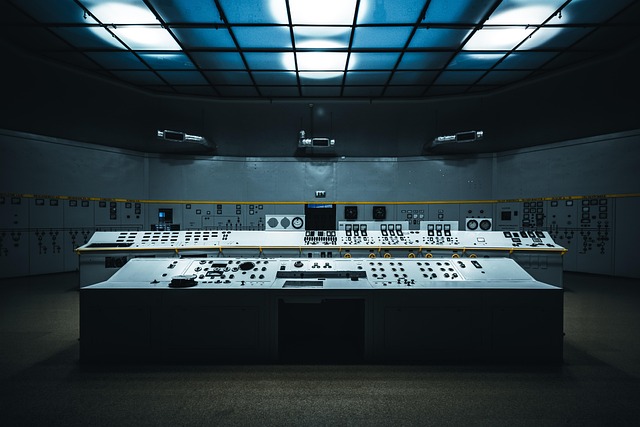
- Ultra-low latency industrial control: If your system relies on instantaneous packet delivery without initial handshaking delays—such as electrical grid isolation controls or military automated tracking—the overhead of DAMA channel requests creates unacceptable operational risk.
- High-density mesh networks with uniform light traffic: When thousands of small sensors transmit minute ping bursts every few seconds, the control channel overhead required to allocate DAMA carrier pairs can actually exceed the payload data size. In these cases, contention-based access methods like Slotted ALOHA or standard IP packet switching perform significantly better.
Related guides
Frequently asked questions
What is the main purpose of demand assigned multiple access?
The primary purpose of demand assigned multiple access is to share satellite transponder bandwidth among multiple user terminals by assigning channels only when a node has active traffic to send, returning those resources to a common pool once transmission completes.
How does DAMA differ from PAMA?
DAMA allocates satellite channels dynamically on demand when sessions start and releases them when they end. PAMA permanently assigns dedicated channels to specific terminals, consuming transponder bandwidth continuously regardless of whether data is actively flowing.
What happens when all channels in a DAMA pool are full?
When all pooled channels are occupied, incoming request signals from user terminals receive a busy or blockage signal from the central controller, forcing the request to queue, retry, or drop until an active session ends and releases its carrier frequencies.