A common question I hear is about confusing electricity bills, filled with terms like ‘kilowatt-hours’ and ‘amperes.’ But before you can make sense of your monthly statement or implement real energy savings, you need to grasp the fundamental unit of power: the watt — or as it’s known in Spanish-speaking contexts, the wattio (plural: wattios). Many people mistakenly think of “wattios” as a specific smart home brand, but it’s actually the direct translation and plural of ‘watts.’ This crucial distinction is where most misunderstandings begin.
Key Takeaways
- Wattios are the unit of electrical power, measuring how quickly energy is consumed or produced.
- Distinguish wattios (power) from watt-hours (energy consumed over time) for accurate energy tracking.
- Phantom load, or ‘vampire drain,’ from idle devices significantly adds to your overall wattio consumption.
- Simple habits like unplugging and using smart plugs can lead to substantial long-term energy and cost savings.
- Making informed decisions about appliance purchases based on their wattio rating is crucial for long-term efficiency.
What Exactly Are Wattios?
Wattios, or watts, are the standard unit of power in the International System of Units (SI). In the simplest terms, a wattio measures the rate at which electrical energy is converted or transferred. Think of it like speed: it tells you how fast energy is being used at any given moment, not how much total energy has been used over time.
Last updated: September 1, 2026
One wattio is equivalent to one joule per second (1 J/s). This means if a device uses one wattio of power, it’s converting one joule of energy every second. For instance, a common LED light bulb might use 7 to 10 wattios, while a powerful microwave oven could draw 1,000 to 1,500 wattios.
Understanding this basic definition is the first step towards demystifying your electricity usage. It’s the ‘horsepower’ of your electrical devices, indicating their instantaneous demand.
Wattios vs. Vatio-Hora: Understanding the Crucial Difference
One of the most common points of confusion is the difference between wattios (watts) and watt-hours (vatio-hora). While wattios measure power, watt-hours measure energy consumption over a period. Your electricity bill charges you for energy, not power.
Imagine a car: the wattio is like the speedometer, showing your instantaneous speed. The watt-hour is like the odometer, measuring the total distance you’ve traveled. If you drive at 60 mph for one hour, you’ve covered 60 miles. Similarly, if a 100-wattio light bulb stays on for 10 hours, it consumes 1,000 watt-hours (or 1 kilowatt-hour, kWh) of energy.
The distinction is vital because knowing a device’s wattio rating helps you calculate its potential energy consumption over time, which directly translates to cost. Many people glance at the wattio rating but don’t connect it to the ‘per hour’ factor that determines their bill.

Why Understanding Wattios Matters for Your Wallet and the Planet
Beyond the technical definitions, a clear grasp of wattios empowers you. When you know how much power your devices demand, you can make informed decisions that impact both your finances and the environment. Energy costs are a significant recurring expense for households and businesses alike, with average residential electricity prices in the US fluctuating between $0.12 and $0.20 per kWh in 2026, according to the U.S. Energy Information Administration (EIA).
Every wattio saved contributes to a lower electricity bill. Plus, reducing energy consumption lessens the demand on power grids, which often rely on fossil fuels, thereby cutting down carbon emissions. It’s a direct link between a small technical detail and a large societal impact. I think this connection is often overlooked by consumers focusing only on the final bill total.
The Silent Culprits: Appliances That Consume More Wattios Than You Think
Some devices are obvious energy hogs, like electric heaters or air conditioners. But many everyday appliances quietly add significant wattios to your total consumption, even when idle. This phenomenon is known as ‘phantom load’ or ‘vampire drain.’
Devices like televisions, gaming consoles, cable boxes, laptop chargers, and even coffee makers continue to draw small amounts of power when turned off but still plugged in. Individually, these might only be a few wattios each, but cumulatively across an entire home, they can add up to 50-100 wattios or more, 24/7. This constant drain can account for 5-10% of your total electricity bill, a surprising figure for many.
For example, a modern TV in standby might draw 1-2 wattios, while a desktop computer in sleep mode could draw 5-10 wattios. A gaming console could be 10-20 wattios in standby. These small numbers quickly become significant when multiplied over hundreds of hours each month.
Calculating Your Wattio Consumption: A Practical Guide
Wants to pinpoint your biggest energy drains? You can calculate the energy consumption of any device if you know its wattio rating and how long it’s used. Most appliances have their wattio rating printed on a label or in the user manual.
Here’s how to do it:
- Find the Wattio Rating: Look for a label on the device (often on the back or bottom) that states its power in watts (W) or wattios.
- Estimate Usage Time: Determine how many hours per day or month the device is actively used or left in standby.
- Calculate Daily Watt-Hours: Multiply the wattio rating by the hours of use. For example, a 60-wattio fan running for 5 hours a day uses 300 watt-hours (60 W 5 h = 300 Wh).
- Convert to Kilowatt-Hours (kWh): Divide your watt-hours by 1,000 (since 1 kWh = 1,000 Wh). The 300 Wh fan uses 0.3 kWh per day.
- Estimate Monthly Cost: Multiply the daily kWh by 30 (days in a month) and then by your electricity rate (e.g., $0.15/kWh). Our fan costs $1.35 per month (0.3 kWh/day 30 days * $0.15/kWh).
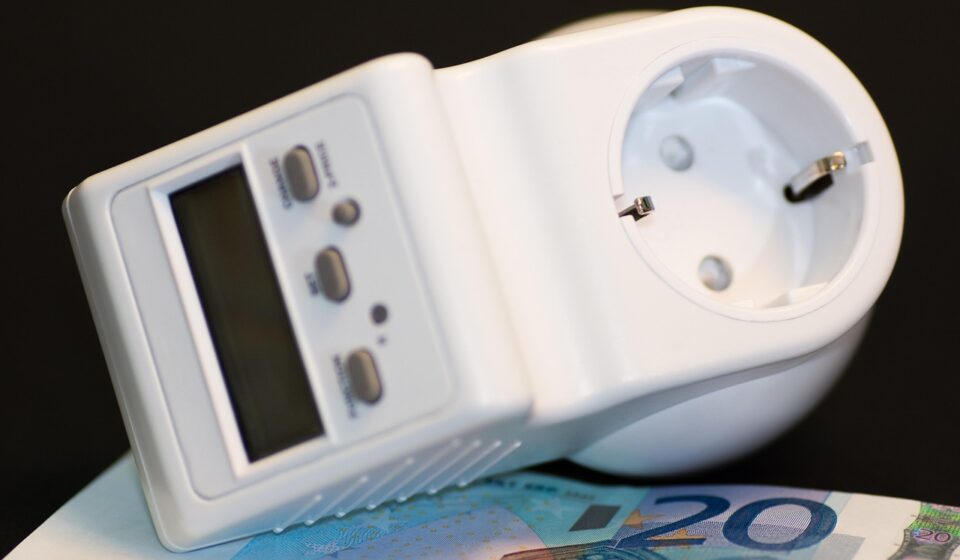
For a more precise measurement of phantom load, consider investing in a plug-in energy meter (often called a ‘kill-a-watt’ meter). These inexpensive devices measure the real-time wattio draw of any appliance plugged into them, allowing you to accurately identify hidden consumption.
Smart Strategies to Reduce Your Wattio Footprint
Once you understand your consumption, implementing changes is straightforward. My advice is to tackle the biggest consumers first, but don’t underestimate the cumulative effect of small savings.
- Unplug Idle Devices: The simplest and most effective strategy for combating phantom load. If a device isn’t in use, unplug it.
- Use Smart Plugs: For devices that are inconvenient to unplug, smart plugs (like those from TP-Link Kasa or Shelly) allow you to remotely cut power, eliminating standby consumption. Many can be scheduled to turn off at night or when you’re away.
- Power Strips with Switches: Group multiple devices on a single power strip that has an on/off switch. This allows you to cut power to an entire entertainment center or computer setup with one flick.
- Optimize Appliance Usage: Run dishwashers and washing machines only when full, use cold water cycles when possible, and air dry laundry. These large appliances are significant wattio users.
- LED Lighting: If you haven’t already, switch all incandescent bulbs to LEDs. They use significantly fewer wattios for the same light output. A 60-wattio incandescent bulb can be replaced by a 9-wattio LED, saving 51 wattios per bulb.
Common Mistakes When Managing Household Wattios
Even with the best intentions, people often make errors that undermine their energy-saving efforts. Knowing these pitfalls can help you avoid them.
One frequent mistake is focusing solely on turning off lights. While important, lighting typically accounts for a smaller portion of the overall energy bill compared to heating, cooling, and large appliances. Overlooking phantom loads is another big one; many assume an appliance is off when the indicator light is out, but that’s not always the case.
According to the Lawrence Berkeley National Laboratory, standby power can represent up to 10% of residential electricity consumption. Ignoring the wattio ratings on new appliance purchases is also a common oversight, leading to higher long-term operating costs.
Another error is not accounting for seasonal variations. Heating and cooling systems are massive wattio consumers, and their usage dramatically shifts with the weather. Failing to adjust your habits or thermostat settings seasonally means you’re missing out on major savings opportunities. Finally, many assume energy-efficient labels are a guarantee of low consumption, but they still need to be cross-referenced with your specific usage patterns.
Wattios in the Age of Smart Homes and Renewable Energy
Modern technology offers powerful tools for managing your wattios. Smart home systems, when properly configured, can provide real-time energy monitoring, allowing you to see exactly which devices are drawing power and how much. Systems like Sense or Emporia Vue can break down your household’s total consumption by individual circuit or even appliance, giving you unprecedented insight into your energy usage.
For those venturing into renewable energy, understanding wattios is fundamental. Solar panels are rated in wattios (e.g., a 400-wattio panel), indicating their peak power output under ideal conditions. The total wattio capacity of your solar array determines how much electricity it can generate.
Similarly, battery storage systems are rated by their watt-hour capacity, indicating how much energy they can store. Integrating these systems requires a clear understanding of your current wattio demand to size them correctly and maximize their benefits.
Choosing Appliances Wisely: Beyond the “Energy Efficient” Label
When buying new appliances, the “energy efficient” label is a good start, but it’s not the whole story. You need to look at the specific wattio ratings and, more importantly, the estimated annual energy consumption (often listed in kWh/year). This figure takes into account typical usage and gives you a much clearer picture of the running costs.
Consider the trade-off between purchase price and operational cost. A slightly more expensive appliance with a significantly lower annual kWh rating will often save you more money over its lifespan. For instance, a refrigerator that costs $100 more but saves 200 kWh per year (at $0.15/kWh) will pay for itself in just over three years, and then continue to save you money for the rest of its decade-plus lifespan.
This long-term perspective is crucial. For detailed comparisons, the Energy Star program provides valuable data on various product categories.
Pros and Cons of Energy Monitoring Devices
| Feature | Pros | Cons |
|---|---|---|
| Real-time Data | Instant feedback on consumption, identifies active loads. | Requires user interpretation; can be overwhelming initially. |
| Phantom Load Detection | Highlights hidden energy drains, enables targeted savings. | May require individual smart plugs for granular appliance data. |
| Cost Savings | Directly correlates usage to bill, motivates behavioral changes. | Initial investment cost for hardware. |
| Integration | Often integrates with smart home platforms for automation. | Compatibility issues with some older or proprietary systems. |
| Environmental Impact | Empowers users to reduce carbon footprint. | Requires active engagement to see benefits. |
Expert Insights for Maximizing Wattio Savings
Beyond the basics, there are nuanced approaches to further optimize your wattio usage. One area I emphasize is understanding the ‘peak demand’ periods in your local grid. Some utility companies offer time-of-use (TOU) billing, where electricity costs more during high-demand hours (e.g., late afternoon). By shifting high-wattio tasks like running a dishwasher or charging an electric vehicle to off-peak hours, you can significantly reduce your bill, even if the total watt-hours consumed remain the same.
Another insight is the often-overlooked insulation factor. Poor insulation in walls, roofs, and windows forces heating and cooling systems to work harder, demanding more wattios for longer periods. Investing in proper insulation, sealing air leaks, and upgrading to energy-efficient windows can dramatically reduce the wattio load required to maintain a comfortable indoor temperature. This is a foundational step that often provides the highest return on investment for long-term energy savings.
Frequently Asked Questions
What’s the difference between wattios and volts?
Wattios measure power, which is the rate of energy transfer. Volts measure electrical potential difference or pressure. Think of it as water flowing through a pipe: volts are the water pressure, while wattios are the rate at which water is delivered, a function of both pressure and flow. Both are crucial for understanding electricity but describe different aspects.
How can I find the wattio rating of an appliance?
Most appliances have their wattio (or watt) rating printed on a label, usually on the back, bottom, or inside a door. You can also check the user manual or the manufacturer’s website. For an active measurement, a plug-in energy meter offers the most accurate real-time reading.
Do LED lights really save that many wattios?
Yes, absolutely. LEDs are incredibly efficient. They use up to 85% less energy than traditional incandescent bulbs and last much longer. For example, a 60-wattio incandescent bulb can be replaced with an LED that uses only 7-9 wattios, providing the same amount of light. This translates to significant long-term savings.
What is a ‘kilowatt-hour’ and how does it relate to wattios?
A kilowatt-hour (kWh) is a unit of energy, representing the consumption of 1,000 wattios (1 kilowatt) for one hour. Your electricity bill is calculated based on the total kilowatt-hours you consume. Wattios are the instantaneous power, while kilowatt-hours are the cumulative energy used over time.
Can I use smart plugs to measure wattios?
Many smart plugs today come with integrated energy monitoring features. These devices can track the real-time wattio consumption of anything plugged into them and often provide historical data through an app. They are an excellent tool for identifying phantom loads and understanding individual appliance usage patterns.
Are there government programs to help with energy efficiency?
Many governments and local utility companies offer rebates, incentives, or low-interest loans for energy-efficient home improvements, such as upgrading appliances, insulation, or installing solar panels. Checking your local energy provider’s website or government energy departments (like the US Department of Energy) can provide valuable information.
Conclusion
Understanding wattios isn’t just for electricians or engineers; it’s a fundamental concept for anyone looking to take control of their energy consumption. By recognizing wattios as the measure of instantaneous power, distinguishing them from watt-hours, and actively monitoring your devices, you gain the power to make impactful decisions. Reducing your wattio footprint not only shrinks your electricity bill but also contributes to a more sustainable future. Start by identifying your phantom loads today, and you’ll be amazed at the difference.
Information current as of September 2026; pricing and product details may change.