
For businesses seeking advanced conversational AI, a Chatbot App Development Company specializes in creating custom, intelligent virtual assistants tailored to specific operational needs and customer interactions. These firms design, build, and integrate sophisticated AI chatbots capable of complex tasks, deep system integrations, and continuous learning, moving far beyond basic FAQ functionalities.
- A specialized Chatbot App Development Company offers custom AI solutions far beyond basic FAQs, crucial for 2026’s competitive landscape.
- Costs for custom chatbot development vary significantly, ranging from $5,000 for simple bots to over $50,000 for complex enterprise-grade generative AI solutions.
- Effective chatbot development involves a structured process including discovery, design, development, integration, testing, and continuous optimization.
- When choosing a partner, prioritize experience with your industry, a clear communication strategy, and proven expertise in advanced AI, including LLMs.
- Integrating chatbots with existing business systems is vital. For example, integrate them with CRM and ERP. This maximizes their value. It also achieves true operational efficiency.
What is a Chatbot App Development Company and What Do They Do?
A Chatbot App Development Company specializes in creating sophisticated AI-driven conversational interfaces tailored to specific business needs. Unlike generic, template-based solutions, these firms build custom virtual assistants capable of complex interactions, deep integrations, and continuous learning.
Their role extends beyond mere coding. It encompasses strategic planning and user experience design. They also train natural language processing (NLP) models. And they ensure smooth integration into existing enterprise systems. As of July 2026, demand for truly intelligent automation is surging. Therefore, these specialized companies are indispensable for competitive businesses.
For instance, an e-commerce brand might need a chatbot that not only answers product questions but also processes returns, tracks orders across multiple carriers, and suggests personalized recommendations based on past purchases and browsing behavior. This level of functionality requires a dedicated chatbot development firm with expertise in both front-end user experience and complex back-end system integrations.
Modern chatbot architecture uses Retrieval-Augmented Generation (RAG). It also relies on vector databases like Pinecone or Qdrant. Furthermore, it incorporates Large Language Models (LLMs). A specialized agency builds context pipelines. This prevents exposing an unconstrained LLM to customers. The model draws answers strictly from verified internal knowledge bases. As a result, it prevents hallucinated responses. It also serves enterprise-accurate information in real time.
| Chatbot Architecture | Mechanism | Best Used For | Limitations |
|---|---|---|---|
| Rules-Based (Decision Tree) | Pre-programmed if/then branches | Simple, static navigation (e.g., store hours) | Fails when users ask non-standard queries |
| Turnkey SaaS Widget | Basic prompt wrapping on public LLM | Standard customer support templates | Limited back-end integration and data security control |
| Custom Enterprise AI (RAG + Agents) | Vector retrieval + Fine-tuned LLM + API connectors | Complex transactional flows, CRM/ERP operations | Higher upfront engineering investment and timeline |
Is a Chatbot an App and How Does Chatbot Development Work?
A chatbot can appear in many forms. For example, it can be a standalone application, a “chatbot app.” More commonly, you can integrate it into existing applications or websites. You can also add it to messaging platforms. When people search for a “chatbot app development company,” they seek a partner. They want to build a conversational interface. You can deploy this across multiple digital touchpoints. This might include a web-based chat widget. It could also be a bot within a mobile app. Or it might be an agent on platforms like WhatsApp or Slack.
Chatbot development is a comprehensive process. It involves designing, building, and deploying AI-powered conversational systems. First, you define the bot’s purpose. Next, you design its conversation flows. You also select and train the underlying AI models. Then you integrate necessary business systems. Finally, you ensure a smooth user experience. The goal is to create an effective bot. It understands user intent. It processes information. And it provides accurate, helpful responses or takes actions.
Why Your Business Needs a Custom Chatbot Solution
While off-the-shelf chatbots can handle basic queries, they often lack the depth required for meaningful customer engagement or complex operational tasks. A custom chatbot solution, built by a dedicated Chatbot App Development Company, offers unparalleled flexibility and precision.
Businesses that invest in custom solutions report significant improvements in customer satisfaction and operational efficiency. According to recent industry reports, businesses using advanced AI chatbots have seen up to a 70% increase in customer satisfaction and a 60% reduction in support costs, particularly in high-volume industries.
You can train a custom bot on proprietary data. This allows it to understand industry-specific jargon. It also learns company policies and unique customer interaction patterns. As a result, this specificity boosts resolution rates. It also creates a more personalized user experience. This differentiates your brand in a crowded market. Unlike generic solutions, a custom solution protects your data. It uses stringent privacy and security controls. This is crucial for sensitive business information.

Key Services Offered by Top Chatbot Development Firms
Leading Chatbot App Development Companies provide a complete suite of services, ensuring end-to-end support for your conversational AI initiatives. These services typically include:

- Strategy & Consulting: Defining goals, identifying use cases, mapping ROI metrics, and outlining the chatbot’s scope and software architecture. This initial phase is crucial for aligning the chatbot project with overarching business objectives and setting realistic expectations.
- Conversation Design: Crafting intuitive and engaging dialogue flows, persona development, brand tone alignment, and ensuring natural language understanding (NLU). This involves designing how the bot interacts, responds to unexpected inputs, and gracefully hands off to human agents when necessary.
- AI/ML Model Development & Training: We build and fine-tune underlying AI models. This includes Large Language Models (LLMs). We also develop vector embeddings and chunking strategies. These process and generate accurate, human-like text. We select the right models. Then we train them on your specific datasets. This ensures optimal performance and relevance.
- Integration Services: We connect the chatbot with CRMs. Examples include Salesforce and HubSpot. We also integrate with ERPs like SAP. Additionally, we link ticketing tools such as Zendesk and ServiceNow. We also connect custom payment APIs. This allows smooth data exchange. Secure and robust integration is key. It lets the chatbot access and update real-time business data.
- Deployment & Testing: Rigorous automated testing across edge cases, load testing, security vulnerability checks, and controlled rollout. This ensures the chatbot performs reliably under various conditions and is secure against malicious inputs.
- Post-Deployment Support & Optimization: Continuous drift monitoring, transcript analytics, conversation debugging, and iterative model retraining based on real user interactions. This ongoing support is vital for maintaining the chatbot’s accuracy and adapting it to evolving business needs and user behaviors.
Ensuring the firm can adapt to rapidly evolving AI models is harder. A good company will not just implement a generic LLM. Instead, they will fine-tune it. They might even integrate multiple models. For example, they could use Anthropic’s Claude 3 for complex reasoning. OpenAI’s GPT works well for creative text generation. Lightweight local open-source models like Llama can handle routine entity extraction. This fits specific tasks. It also ensures optimal performance, privacy, and cost-efficiency.
Navigating the AI Chatbot Development Process
Building a high-quality chatbot application is a structured process. It is also iterative. Typically, it follows these crucial steps:
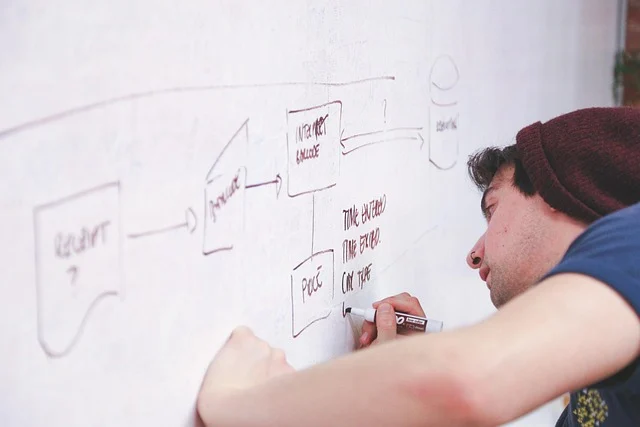
- Discovery & Planning: Initial workshops to understand business objectives, target audience, technical requirements, compliance parameters, and data sources. This phase defines the chatbot’s core purpose and desired outcomes, including key performance indicators (KPIs) like resolution rate or cost savings.
- Design & Prototyping: Creating conversation flows, fall-back behavior rules, user interface (UI) mockups for chat windows across mobile and web platforms, and defining the chatbot’s persona. Interactive prototypes allow for early feedback from stakeholders and potential users, helping to refine the experience before significant development begins.
- Development & Integration: We build the chatbot’s backend logic. We also establish RAG architecture. Then we train NLU models. We integrate with necessary REST/GraphQL APIs. We also connect with enterprise systems. Engineering teams often use Python or Node.js. They also use specialized AI frameworks. For example, LangChain or LlamaIndex help construct core functionalities and connectors.
- Testing & Quality Assurance: Extensive testing for NLU accuracy, prompt injection security, response latency, API failures, and multi-turn conversational context retention. This includes unit testing, regression testing, and user acceptance testing (UAT) with real users to catch nuanced conversational issues.
- Deployment & Launch: We roll out the chatbot to its target environment. This could be a mobile application. It might also be a website frontend. Or it could be a messaging app like WhatsApp or Slack. Another option is an internal corporate portal. This phase often involves setting up monitoring tools. These track initial performance.
- Monitoring & Optimization: We continuously track performance metrics. For example, we monitor containment rates, resolution rates, and user satisfaction scores. Also, we analyze conversational logs and refine prompts. This iterative process ensures the chatbot learns from real interactions. It improves over time and adapts to new data. The chatbot also adjusts to changing user needs.
Worked Example: Order Cancellation & Refund Routing Flow
To understand how a custom chatbot operates in practice, consider an automated e-commerce cancellation request handled by a RAG-enabled agent:
- User Query: “I ordered a sweater 2 hours ago (Order #89421), but I selected the wrong size. Can I cancel it?”
- NLU Intent & Entity Extraction: The bot identifies the intent as cancel_order and extracts order_id: 89421.
- API Lookup: The chatbot queries the ERP/Order Management system via secure API to verify order status. The API confirms status: Processing – Unfulfilled.
- Policy Evaluation: The chatbot checks business rules via retrieval: Orders under 4 hours old in Unfulfilled status are eligible for instant cancellation.
- Action Execution: The bot triggers the cancellation webhook in the ERP, initiates a refund token through the payment portal, and updates the CRM user history.
- Response Generation: “Your order #89421 has been canceled, and a refund of $65.00 has been issued to your original payment method. You’ll receive a confirmation email shortly.”
If the order had already entered the Shipped state, the chatbot would dynamically adjust, explaining that cancellation is no longer possible and presenting a pre-filled return label once the package arrives—preventing customer frustration through real-time operational context.
Critical Factors Influencing Chatbot Development Cost
The cost to hire a Chatbot App Development Company varies widely. It largely depends on the project’s complexity and scope. For example, simple, rules-based chatbots for basic FAQs might start from $5,000 to $10,000. However, complex enterprise-grade generative AI chatbots can easily exceed $50,000. Highly customized agentic AI solutions can even cost hundreds of thousands.
| Project Complexity Level | Typical Price Range | Core Features & Infrastructure | Target Organization |
|---|---|---|---|
| Basic / Rules-Based | $5,000 – $10,000 | Pre-scripted dialogue flows, simple website widget, zero backend integrations. | Small local service businesses, basic FAQ portals. |
| Mid-Tier Custom AI Assistant | $15,000 – $40,000 | RAG knowledge base integration, CRM/Helpdesk API hooks, single LLM model fine-tuning, analytics dashboard. | Growing SMBs, mid-market e-commerce, specialized service providers. |
| Enterprise Agentic Solution | $50,000 – $150,000+ | Multi-agent workflows, deep ERP/CRM biometric authentication, sub-second latency targets, SOC2/HIPAA compliance, multi-LLM orchestration. | Large enterprises, financial institutions, healthcare providers, global logistics networks. |
Key cost drivers include:
- Chatbot Functionality: Basic Q&A vs. Transactional capabilities (e.g., booking, purchasing) vs. Advanced predictive analytics and personalized responses. The more complex the tasks the chatbot needs to perform, the higher the development effort and cost.
- System Integrations: The number and complexity of third-party systems (CRM, ERP, payment gateways, internal databases) the chatbot needs to connect with securely. Integrating with legacy or poorly documented systems can significantly increase costs.
- Tech Stack & AI Model: Utilizing open-source frameworks versus proprietary enterprise platforms, and the choice of underlying AI models (e.g., fine-tuned open-source LLMs vs. Commercial API access to models like GPT-4 or Claude 3). Commercial LLMs often involve ongoing API usage fees in addition to development costs.
- Conversation Design Complexity: Extensive user research, persona development, localized multi-language support, and iterative dialogue flow mapping. A highly refined and user-friendly conversation experience requires more design and testing hours.
- Team Size & Expertise: The experience level of developers, AI engineers, UX designers, and project managers involved. Hourly rates can range significantly based on geographic location and specialization. Highly specialized AI talent commands higher rates.
- Ongoing Maintenance & Support: Post-launch monitoring, infrastructure host fees, API token usage costs, and retraining of AI models based on evolving business data. This typically involves a recurring service agreement to ensure long-term performance and relevance.
Strategic Adaptability: The Core Benefit of Enterprise Apps in 2026
Modern enterprise applications must be adaptable. Strategic adaptability means your conversational interface can change. It adapts when market conditions shift. It also adapts as product lines change. Furthermore, it changes when customer communication preferences evolve. A custom chatbot codebase offers flexibility. Developers can swap underlying LLMs. They can also adjust context retrieval logic. Or they can attach new API webhooks smoothly. This happens as your technology stack evolves. This flexibility is a significant advantage. It beats rigid, off-the-shelf solutions. Those solutions might quickly become outdated. They may also fail to meet new business demands.

Choosing the Right Chatbot Partner: Essential Criteria
Selecting the ideal Chatbot App Development Company is critical for project success. Don’t just look for technical skills; assess their strategic fit with your business governance and security needs.

- Proven Expertise in Conversational AI: Look for a portfolio demonstrating successful projects with advanced NLP, vector retrieval, machine learning, and experience with modern LLM deployment patterns. Ask for case studies relevant to your domain and inquire about their approach to managing model bias and drift.
- Industry Experience: A company familiar with your specific industry (e.g., healthcare, finance, retail) will better understand your unique challenges, compliance requirements, and customer expectations. This specialized knowledge can significantly reduce development time and improve the relevance of the chatbot.
- Clear Communication & Agile Methodology: Ensure the company has a transparent development process. They should also conduct regular sprint reviews. Furthermore, the company must be flexible enough to adapt as requirements shift during testing. Good communication ensures you stay informed. You can then provide timely feedback.
- Strong Integration Capabilities: Verify their ability to smoothly connect the chatbot with your existing software ecosystem, as API authentication and legacy software bridges are where underprepared projects falter. Ask about their experience with your specific CRM, ERP, or other critical systems.
- Focus on User Experience (UX): A technically brilliant chatbot is useless if it’s frustrating to interact with. Prioritize firms that emphasize intuitive conversation design and user-centric testing. A good UX team will craft natural, empathetic, and efficient dialogue flows.
- Scalability & Future-Proofing: Discuss how the chatbot architecture scales. It must handle peak traffic events. For instance, consider Black Friday sales or system outages. Also, ask how they plan to incorporate future AI advancements. The solution should grow with your business. It must also adapt to emerging technologies.
- Post-Deployment Support & Optimization: A reliable partner offers ongoing maintenance, prompt security hardening, performance monitoring, and iterative model evaluation. This long-term partnership ensures your chatbot remains effective, secure, and up-to-date.
Understanding the company’s approach to data privacy and security is non-negotiable. This is especially true for enterprise clients. In July 2026, data regulations will be stringent. Therefore, custom solutions must guarantee data protection. Customer queries and proprietary records must never train third-party public AI models without consent. Inquire about their compliance certifications. For example, ask about ISO 27001 and SOC 2. Also, review their data governance policies.
Real-World Impact: Chatbot Use Cases Across Industries
Chatbot applications are transforming operations across various sectors, demonstrating tangible ROI for businesses that invest wisely:

- E-commerce: A global fashion retailer deployed an AI-powered shopping assistant. This chatbot not only answered product questions and tracked orders but also provided personalized style recommendations based on user preferences and current trends, leading to a 15% increase in conversion rates for assisted sales. It also handled common return inquiries, reducing the load on customer service agents.
- Healthcare: A large hospital network implemented a virtual assistant for patient scheduling and information. This chatbot handled appointment bookings, medication reminders, and answered common questions about services, reducing call center volume by 30% and improving patient access to information. Strict HIPAA compliance was a key requirement for its development.
- Financial Services: A regional bank launched a secure chatbot. It assists customers with account balance inquiries. Also, it helps with transaction history and basic loan application pre-qualifications. This improved customer service availability. It also significantly reduced the workload on human agents for routine tasks. The chatbot maintained robust security and complied with financial regulations.
- Human Resources: An enterprise company uses an HR chatbot to answer employee questions about benefits, payroll, and company policies. Custom chatbot solutions provide instant support for internal staff, freeing up HR teams for strategic initiative execution and improving employee satisfaction by offering quick, accurate answers 24/7.
- Logistics and Supply Chain: A logistics provider implemented a chatbot to track shipments, provide real-time updates on delivery status, and handle common queries regarding routes or delays. This reduced inbound calls to their support center by 25% and improved customer visibility into their deliveries.
Common Pitfalls in Chatbot App Development and How to Avoid Them
| Common Pitfall | Root Cause | Practical Solution |
|---|---|---|
| Model Hallucinations | Relying solely on base LLM knowledge without grounding. | Implement strict Retrieval-Augmented Generation (RAG) with vector data bounds and dynamic confidence scoring fallbacks. Train the LLM exclusively on verified internal knowledge bases. |
| Integration Bottlenecks | Neglecting API rate limits or legacy infrastructure protocols. | Conduct early technical spiking during Discovery phase to test endpoint responses and establish API middleware. Use robust error handling and retry mechanisms. |
| Dead-End Conversations | Unclear prompt boundary fallback handling when intent is missed. | Design explicit escalation paths that pass full transcript context smoothly to human support agents. Provide clear options for users to rephrase or seek alternative help. |
| Prompt Injection Vulnerabilities | Lack of input validation and system prompt defense. | Deploy guardrail frameworks (e.g., NeMo Guardrails) to filter unauthorized operational override requests. Regularly audit prompts and responses for potential exploits. |
| Poor User Adoption | Chatbot does not meet user expectations or is difficult to use. | Involve target users in early design and testing (UAT). Ensure the chatbot’s persona and tone align with your brand, and clearly communicate its capabilities. |
| High Operational Costs | Inefficient use of LLM tokens or unoptimized infrastructure. | Monitor token usage closely. Implement intelligent caching for frequent queries. Optimize RAG architecture to retrieve only necessary information, reducing LLM input size. |
Who This Advice Does NOT Suit
Investing in custom chatbot app development is a strategic move, but it is not the right decision for every business organization:
- Low Volume Operations: Businesses receiving fewer than 10 to 15 support tickets or customer inquiries per day do not generate enough operational friction to justify a custom $15,000+ development project. Standard email or phone support is more cost-effective.
- Static Information Sites: Websites that strictly require simple, fixed navigation assistance can easily use basic off-the-shelf SaaS widgets ($20–$50/month) rather than engaging a dedicated engineering agency. These solutions are sufficient for answering very basic, unchanging questions.
- High-Risk Human Judgment Domains: Scenarios requiring complex legal arbitration, nuanced emotional counseling, or life-safety emergency decisions where automated AI responses introduce unacceptable liability risks. In these areas, human empathy, judgment, and legal expertise remain irreplaceable.
- Businesses with Limited Data: Custom AI chatbots, especially those using LLMs and RAG, perform best when trained and grounded in substantial, high-quality proprietary data. Businesses with very little structured data or knowledge bases may struggle to achieve effective results from a custom AI solution.
Future Trends in Conversational AI and Chatbot Technology
The world of conversational AI is rapidly evolving, driven by advancements in Large Language Models (LLMs) and generative AI. Businesses engaging a Chatbot App Development Company in 2026 should be aware of these transformative trends:
- Advanced Generative AI: LLMs like OpenAI’s GPT series and Anthropic’s Claude 3 are powerful. They enable chatbots to generate more natural responses. Chatbots also provide more nuanced and contextually aware answers. This moves them beyond pre-scripted responses. As a result, truly dynamic conversations are possible. According to Anthropic’s March 2026 research, advanced AI offers significant opportunities. Its value is still largely untapped.
- Agentic AI Solutions: The rise of autonomous AI agents capable of performing multi-step tasks across disconnected software platforms and making deterministic decisions based on programmatic logic will redefine chatbot capabilities. These bots won’t just answer questions; they’ll execute end-to-end workflows autonomously, coordinating with multiple systems.
- Multimodal Chatbots: Expect chatbots to increasingly incorporate voice, image, document parsing, and video inputs and outputs, creating richer and more accessible user experiences. This means users could upload a photo of a broken product for assistance or speak naturally to the bot.
- Hyper-Personalization: Using secure enterprise data lakes, future chatbots will offer highly individualized interactions, predicting customer needs and proactively offering tailored solutions. This goes beyond basic user history, using deeper behavioral and preference data.
- Ethical AI & Explainability: With increased sophistication comes a greater focus on ensuring AI chatbots are fair, transparent, and bias-free. Companies will prioritize explainable AI to build trust and meet regulatory mandates, allowing businesses to understand how and why a chatbot arrived at a particular decision or response.
Understanding these trends helps businesses select a Chatbot App Development Company that’s not just current, but forward-thinking, ensuring their investment remains relevant for years to come. Xamarin App Development Company: Navigating the Future in 2026
Frequently Asked Questions
What is the typical timeframe for chatbot app development?
The development timeframe varies based on complexity. A basic chatbot might take 4–8 weeks, while a complex enterprise solution with multiple integrations and advanced AI features could require 4 to 6 months or more. Project scope and client responsiveness during testing phases significantly influence the timeline.
How do I ensure data privacy with a chatbot solution?
Ensure your Chatbot App Development Company adheres to strict data security protocols, including end-to-end encryption, role-based access controls, zero-data-retention agreements with LLM providers, and compliance with relevant regulations like GDPR, CCPA, or HIPAA. Discuss their data handling policies and storage architecture during selection.
Can chatbots integrate with all existing business systems?
Most modern chatbot platforms and custom development companies can integrate with a wide range of business systems, including popular CRMs (e.g., Salesforce), ERPs (e.g., SAP), and helpdesk software (e.g., Zendesk) via RESTful APIs or GraphQL endpoints. However, integration complexity depends on the accessibility and documentation of your legacy software interfaces.
What are the maintenance requirements for a custom chatbot?
Custom chatbots require ongoing maintenance, including monitoring performance metrics, updating vector embeddings with new enterprise data, refining conversation prompts, tracking API token costs, and patching software dependencies. This ensures the chatbot remains accurate, secure, and aligned with operational changes, typically managed via a monthly support service agreement.
What is the difference between a rules-based chatbot and an AI chatbot?
A rules-based chatbot follows predefined scripts and conditional logic, offering limited flexibility when users stray from expected inputs. An AI chatbot uses natural language processing (NLP), machine learning, and large language models to understand intent, interpret intent despite typos or slang, and generate flexible, contextually relevant responses.
How does a chatbot improve customer experience?
Chatbots enhance customer experience by providing instant 24/7 support, quickly answering routine queries, personalizing interactions based on authenticated user history, and routing complex queries to human agents with full conversation transcripts. This eliminates wait times and improves overall resolution efficiency.
Conclusion
Partnering with the right Chatbot App Development Company is no longer a luxury. Instead, it is a strategic imperative for businesses. These businesses aim to thrive in 2026. Custom AI chatbots offer strategic opportunities for growth and efficiency. They enhance customer engagement. They also streamline internal operations. Focus on a partner with proven technical expertise. Also, look for a transparent engineering process. Choose a forward-thinking approach to conversational AI. This will unlock the full value of this transformative technology for your enterprise.