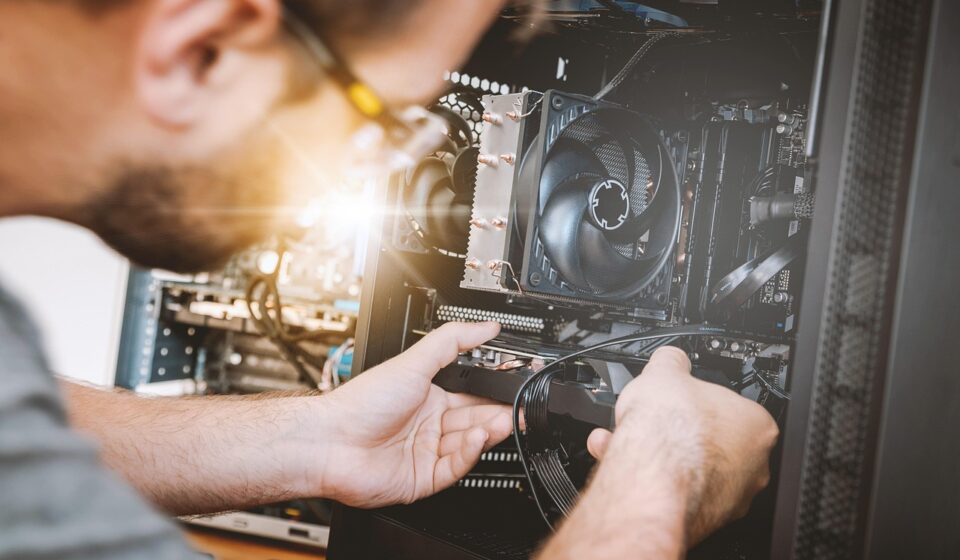
A dead motherboard often feels like the end for your computer, but that’s not always the case. While many assume a failed motherboard necessitates a costly full system replacement, component-level motherboard repair is a very real, and often more economical, alternative.
Last updated: August 28, 2026
Instead of scrapping your entire system, understanding the nuances of motherboard repair can save you hundreds, if not thousands, of dollars. It’s a complex field, requiring specialized tools and expertise, but recognizing its potential can significantly extend the life of your valuable electronics.
Key Takeaways
- Many motherboard failures, even severe ones, can be repaired at the component level by skilled technicians.
- Component-level repair often involves micro-soldering and detailed circuit board diagnostics, distinct from simply swapping out the entire board.
- The decision to repair versus replace hinges on the component cost, labor involved, and the overall value of the device.
- Liquid damage and power delivery issues are common repairable motherboard problems.
- Specialized tools like multimeters, oscilloscopes, and hot air stations are essential for effective motherboard fault finding.
The Contrarian View: Why Repair Matters
For years, the conventional wisdom has been that a motherboard failure means your device is a write-off. Most computer shops, even today in 2026, will quote you for a full motherboard replacement, which can easily run into hundreds or even thousands of dollars, especially for high-end laptops or Macs. The contrarian view, however, is that this approach often overlooks a more sustainable and cost-effective solution: actual motherboard repair.
I think the industry often pushes full replacements due to the complexity and specialized skill required for component-level work. However, with the right expertise and equipment, many issues, from a faulty power delivery circuit to liquid damage, can be precisely fixed. This not only saves money but also reduces e-waste, which is increasingly important.
Where it gets harder is convincing consumers that their device isn’t beyond hope. A thorough diagnosis by someone capable of circuit board diagnostics can reveal that only a small, inexpensive component has failed, making motherboard repair a far more appealing option than purchasing a new system.
Common Motherboard Failure Symptoms
Identifying that your motherboard is the culprit can be tricky, as symptoms often mimic other hardware failures. However, certain patterns strongly suggest a motherboard problem. These include a complete lack of power (no fans, no lights), intermittent shutdowns, random reboots, or failure to POST (Power-On Self-Test) with no display output.
For instance, a laptop might suddenly refuse to charge, even with a known-good charger, indicating a fault in the charging circuit on the logic board. Another common scenario is a desktop PC that powers on but produces no display, even after testing with a different GPU or RAM, pointing towards issues with the BIOS chip or CPU power delivery.
Less obvious signs can include USB ports failing, network connectivity dropping, or strange error codes that don’t seem related to software. These are often indicators of localized damage or degradation within the motherboard’s intricate network of traces and components.
Diagnosing Motherboard Problems
Accurate diagnosis is the cornerstone of effective motherboard repair. Without it, you’re just guessing, which can lead to further damage. The process typically begins with visual inspection for obvious signs like burnt components, bulging capacitors, or liquid residue, especially in cases of liquid damage repair.
Beyond that, diagnostic tools become indispensable. A digital multimeter is fundamental for checking voltages, resistances, and continuity across various points on the circuit board. For more complex issues, an oscilloscope allows technicians to observe waveforms and signal integrity, crucial for identifying intermittent faults or timing issues within power delivery systems.
I would always start with the power rail measurements. Many laptop motherboard issues stem from a failure in the power delivery system, where a single MOSFET or voltage regulator module (VRM) could be shorted. Using schematics, which are essentially electrical blueprints of the motherboard, is vital for pinpointing test points and understanding circuit flow. According to industry experts, having access to these schematics can reduce diagnostic time by up to 50% for complex problems.
Component-Level Motherboard Repair Explained
Component-level repair is where the real magic happens. Unlike board-swapping, this involves identifying and replacing individual faulty components on the motherboard itself. This often requires highly precise micro-soldering techniques, a skill that takes years to master.
Think of it as micro-surgery for your electronics. A technician might use a hot air rework station to carefully remove a tiny, failed capacitor or an integrated circuit (IC) chip, then solder a new one in its place. This precision work is essential when dealing with the increasingly small surface-mount components found on modern logic boards.
Common component replacements include capacitors, resistors, diodes, MOSFETs, and even specialized ICs like the BIOS chip or power management controllers. This method is particularly effective for repairing dead laptop motherboards or desktop motherboard troubleshooting where the core CPU and chipset are still functional.
Repairing Common Motherboard Issues
Certain motherboard issues appear more frequently and are often good candidates for repair. Power-related problems are high on this list. A common failure is a short circuit in the power input stage, often due to a faulty charging port or a damaged power IC. These can often be diagnosed with a multimeter and repaired by replacing the specific shorted component.
Liquid damage repair is another frequent service. When liquid spills onto a motherboard, it can cause corrosion and short circuits. The repair process involves thorough cleaning, inspecting for damaged traces and components, and then repairing or replacing those parts. For instance, a technician might need to repair a corroded trace by carefully scraping away the damage and creating a new connection with fine wire.
Other common repairs include fixing unresponsive USB ports (often due to damage to the port itself or its control IC), addressing display issues (which can sometimes be traced to display output ICs), and resolving BIOS corruption through reprogramming the BIOS chip. Each of these requires specific tools and a deep understanding of circuit functionality.
The Cost Dilemma: Repair vs. Replacement
The decision to pursue motherboard repair or opt for a full replacement (either a new motherboard or a new device) is largely economic. A new high-end laptop motherboard can cost anywhere from $300 to $800 or more, plus labor for installation. A component-level repair, on the other hand, might cost $200-$500, depending on the complexity and parts needed.
| Factor | Motherboard Repair | Motherboard Replacement |
|---|---|---|
| Cost Range | $200 – $500 (component level) | $300 – $800+ (new board + labor) |
| Skill Required | High (micro-soldering, schematics) | Moderate (board swap, reassembly) |
| Timeframe | Often 1-3 weeks (diagnostic + repair) | Often 3-7 days (parts order + swap) |
| Data Preservation | Very high chance of data preservation | High chance if drive is separate |
| Environmental Impact | Lower (reusing existing hardware) | Higher (more new components) |
| Warranty (Repair) | Typically 90 days – 1 year | Usually 1-3 years (new part) |
My advice is to consider the total value of your device. If you have an older, entry-level PC that cost $500 new, then a $300 motherboard repair might not be worth it unless it’s a very simple fix. However, for a $2,000 MacBook Pro or a high-performance gaming desktop, a $400 repair is a significant saving compared to buying a new machine. According to LapFix, some repairs that would cost $300-$800 can prevent a $2,000 system replacement.
Pros of Motherboard Repair
- Cost Savings: Often significantly cheaper than full replacement.
- Data Preservation: Higher chance of keeping your original data intact.
- Environmental Impact: Reduces electronic waste by extending device lifespan.
- Retain Original Components: Keeps your existing CPU, RAM, and other peripherals.
Cons of Motherboard Repair
- Time-Consuming: Diagnostics and repair can take longer than a simple swap.
- Skill-Dependent: Requires highly specialized technical expertise and equipment.
- Risk of Further Damage: Improper repair attempts can render the board irreparable.
- Limited Warranty: Repairs typically come with a shorter warranty than new parts.
Why Professional Motherboard Repair is Key
While the idea of DIY motherboard repair might appeal to some, I’d strongly advise against it for anyone without significant electronics repair experience and specialized tools. Modern motherboards are incredibly dense and complex, featuring multi-layer PCBs and minuscule components.
A professional electronics repair service has access to engineering schematics, high-resolution microscopes, precision soldering stations, and advanced diagnostic equipment like thermal cameras and specialized power supplies. These tools are crucial for effective motherboard fault finding and micro-soldering.
More importantly, professionals understand the intricate power delivery networks, signal paths, and common failure points specific to various manufacturers and models. This expertise allows for accurate diagnosis and reliable repair, minimizing the risk of further damage and ensuring a lasting fix. For complex issues, like repairing dead laptop motherboards, this level of expertise is virtually non-negotiable.
Common Mistakes in Motherboard Troubleshooting
One of the most frequent mistakes I see is rushing to conclusions without proper diagnostics. Many people immediately assume the CPU or GPU is dead when the issue is a simple, failed voltage regulator on the motherboard. Always rule out the simplest components first – RAM, power supply, and external peripherals.
Another error is attempting to ‘reflow’ a BGA chip (like a GPU or chipset) with a heat gun without proper temperature control. While this might temporarily fix a cold solder joint, it’s a short-term solution that often causes more damage due to uneven heating, warping the board, or damaging adjacent components.
Failing to discharge capacitors before working on the board is a safety hazard and can damage sensitive components. Always disconnect power and press the power button a few times to drain residual charge. Finally, using incorrect replacement components, especially those with different voltage or current ratings, can lead to immediate or latent failure of the repaired circuit.
Expert Tips for Successful Motherboard Repair
For those considering professional motherboard repair, or even advanced DIYers, I have a few crucial tips. First, always prioritize a shop that specializes in component level repair, not just board swapping. Ask about their diagnostic process and whether they use schematics. This indicates a higher level of expertise.
Secondly, document everything. If you’re attempting any troubleshooting yourself, take photos of cable connections, component placements, and any error messages. This can be invaluable if you eventually hand the device over to a professional.
Finally, understand that not all motherboards are created equal in terms of repairability. Some older, simpler designs are easier to work on, while highly integrated modern boards, especially in ultra-thin devices, present significant challenges. Always get a clear estimate that includes both parts and labor, and understand the warranty offered for the repair.
Consider this a good opportunity to evaluate whether other parts of your system, like storage or RAM, are due for an upgrade. Sometimes, a motherboard repair can be combined with a cost-effective upgrade to breathe new life into an aging machine.
Frequently Asked Questions
How long does motherboard repair typically take?
The duration for motherboard repair can vary significantly based on the complexity of the fault and the availability of replacement components. Diagnostics alone can take several days. A full component-level repair, including sourcing parts, might take anywhere from one to three weeks. Simple fixes could be quicker, but intricate issues require patience.
What is component-level repair, and why is it better?
Component-level repair involves identifying and replacing individual faulty parts on the motherboard, such as capacitors, resistors, or microchips, rather than replacing the entire board. It’s often better because it’s more cost-effective, environmentally friendly by reducing e-waste, and can preserve your original system configuration.
Can liquid-damaged motherboards always be repaired?
Not always, but often. The success of liquid damage repair depends heavily on the type of liquid, the extent of the damage, and how quickly the device was powered off and brought in for service. Acidic liquids or prolonged power application after a spill significantly reduce repair chances. Early intervention is key.
What are the most common causes of motherboard failure?
Common causes of motherboard failure include power surges, overheating, physical damage (especially from drops or impacts in laptops), manufacturing defects, and liquid spills. Over time, component degradation, particularly of capacitors, can also lead to failure. Understanding these helps in preventing future issues.
Is DIY motherboard repair recommended for beginners?
I would not recommend DIY motherboard repair for beginners. It requires specialized knowledge of electronics, circuit board diagnostics, and often micro-soldering skills. Attempting repairs without the proper tools and expertise can easily cause irreversible damage, making the motherboard completely unsalvageable.
How much does professional motherboard repair cost?
The cost of professional motherboard repair varies widely based on the specific issue, the type of device, and the technician’s rates. Expect to pay anywhere from $200 for simpler fixes to $500 or more for complex micro-soldering or liquid damage repair. This is typically still less than the cost of a full motherboard replacement.
Conclusion
Motherboard repair is a specialized, yet highly valuable, service that challenges the common assumption that a dead board means a dead device. By understanding the common symptoms, the importance of detailed diagnostics, and the intricacies of component-level repair, you can make informed decisions that save money and reduce electronic waste. While it’s rarely a DIY effort for the average user, knowing when and how to seek professional help for motherboard repair can breathe new life into your valuable hardware.
Information current as of August 2026; pricing and product details may change.