
Augmented Reality (AR) and Virtual Reality (VR) are transforming business operations, employee training, and customer engagement by delivering concrete operational advantages and measurable ROI as of July 2026. These immersive platforms enable companies to reduce operational costs, improve training effectiveness, and enhance decision-making through 3D data visualization.
Successful deployment requires clear strategic objectives, scalability planning, and overcoming challenges such as high upfront costs, integration complexity, and user adoption. Future developments point toward deeper integration with artificial intelligence and haptic feedback to deliver personalized experiences.
The remaining sections explore the strategic differences between AR and VR, enterprise applications in training and efficiency, customer engagement strategies, integration with legacy enterprise systems, and vital data privacy considerations.
Transforming Businesses with AR VR: The Next-Gen Tech in 2026
Why are businesses rapidly embracing Augmented Reality (AR) and Virtual Reality (VR) as core technologies? Because these immersive platforms are fundamentally reshaping how companies operate, interact with customers, and empower their workforces, delivering tangible competitive advantages in 2026.
- AR and VR are moving beyond niche applications, offering concrete ROI for businesses as of July 2026.
- Immersive technologies significantly enhance operational efficiency, employee training, and customer engagement.
- Strategic implementation requires clear objectives, scalability planning, and strong data privacy measures.
- Challenges include high upfront costs, integration complexity, and ensuring user adoption.
- The future involves deeper integration with AI and haptic feedback, creating more personalized and impactful experiences.
The Strategic Imperative for AR/VR Adoption
For years, AR and VR were often seen as novelties, primarily confined to gaming or niche experimental projects. However, as of July 2026, the maturity of hardware, coupled with sophisticated software, has propelled these technologies into a strategic imperative for businesses aiming for digital transformation. Companies are no longer asking if they should adopt AR/VR, but how quickly they can integrate these tools to stay competitive.

This shift is driven by clear benefits: reduced operational costs, enhanced training effectiveness, and unparalleled customer engagement. According to a 2026 report by Forbes Business Council, companies using immersive marketing saw customer engagement increase by as much as 40%. This signals a broader trend across all business functions.
Beyond that, the ability to visualize complex data in 3D or simulate real-world scenarios virtually offers a distinct advantage in decision-making and problem-solving, creating new avenues for innovation. By placing digital intelligence directly into the spatial context of a physical workflow, spatial computing shifts enterprise software from passive data entry to active contextual guidance.
Comparing AR vs. VR: Strategic Differences and Business Application
Choosing between AR and VR requires understanding how each technology interacts with the user’s physical environment. While both rely on spatial computing, their deployment models, technical architecture, and workplace integration differ significantly.
| Core Dimension | Augmented Reality (AR) | Virtual Reality (VR) |
|---|---|---|
| Primary Modality | Overlays digital elements onto the live physical world. | Replaces the physical environment with a fully synthetic 3D realm. |
| Hardware Context | Smart glasses, heads-up displays (HUDs), mobile devices. | Fully enclosed Head-Mounted Displays (HMDs) with controllers/haptics. |
| Ideal Enterprise Context | On-site field service, assembly guidance, real-time logistics picking. | High-risk industrial simulation, virtual design, immersive onboarding. |
| User Spatial Awareness | High; user remains fully aware of immediate physical surroundings. | Isolated; user is isolated from physical surroundings for full immersion. |
| Key Operational Metric | Task execution speed, error reduction rate, first-time fix rate. | Retention rates, hazard simulation pass rates, travel cost reduction. |
Revolutionizing Employee Training and Development
One of the most impactful applications of AR/VR is in transforming employee training. Traditional methods often fall short in complex or high-risk environments. VR offers safe, repeatable, and highly effective simulations, allowing employees to practice critical skills without real-world consequences.
For instance, medical professionals can practice intricate surgical procedures in a virtual operating room, or airline mechanics can train on virtual jet engines. This not only accelerates learning curves but also significantly reduces the costs associated with physical prototypes or on-the-job errors.
AR, on the other hand, provides ‘on-the-job’ assistance, overlaying digital instructions onto physical equipment. Technicians at a manufacturing plant can use AR glasses to see step-by-step repair guides directly on the machinery they are servicing, boosting efficiency by 25% in some cases, according to a recent developers.dev analysis.
Worked Scenario: Field Technician Troubleshooting with AR Guidance
- Diagnostic Scan: A field service engineer arrives at a remote pump station equipped with AR smart glasses. The glasses identify the machinery via computer vision spatial anchors.
- Contextual Data Overlay: Live telemetry—temperature, pressure, and cycle count—is overlaid beside the physical pump casing via real-time enterprise database feeds.
- Interactive Repair Workflow: An interactive 3D blueprint highlights the specific faulty valve in red, displaying torque requirements and safety lock-out procedures directly within the engineer’s field of view.
- Remote Expert Verification: If an unexpected anomaly occurs, the technician stream-shares their live feed to a senior supervisor who draws 3D annotations in real space to guide the final torque adjustment.
Enhancing Operational Efficiency and Productivity
AR/VR technologies are streamlining operations across various industries. In manufacturing, AR empowers workers with real-time data overlays for assembly, quality control, and maintenance. This minimizes errors and speeds up production cycles. Companies like Boeing have reported significant improvements in wiring accuracy and speed using AR for complex tasks.
Digital twins, often integrated with VR, allow engineers to create virtual replicas of physical assets, systems, or processes. Transforming Businesses With Ar Vr Are Said To Be The Next Technologies enables predictive maintenance, scenario testing, and remote monitoring, identifying potential issues before they impact physical operations. For example, a utility company can visualize the real-time performance of an entire power grid in VR, optimizing resource allocation and preventing outages. This capability alone can lead to substantial cost savings and improved reliability.
Transforming Customer Engagement and Sales
The retail and real estate sectors are using AR/VR to create immersive customer experiences that drive engagement and sales. AR applications allow customers to virtually ‘try on’ clothes, place furniture in their homes before buying, or visualize architectural designs in 3D. This reduces buyer’s remorse and streamlines the purchasing decision.
VR offers virtual showrooms and property tours, enabling potential buyers to explore products or properties from anywhere in the world. A luxury car brand might offer a VR experience where customers can customize and ‘drive’ a new model virtually, experiencing its features before visiting a dealership. This level of immersive marketing, as highlighted by Forbes, is crucial for capturing modern consumer attention and loyalty.
Integrating AR/VR with Existing Enterprise Systems
Where it gets harder is integrating AR/VR solutions smoothly into existing enterprise resource planning (ERP), customer relationship management (CRM), and other legacy systems. A standalone AR/VR app, while impressive, offers limited value if it can’t exchange data with core business applications.
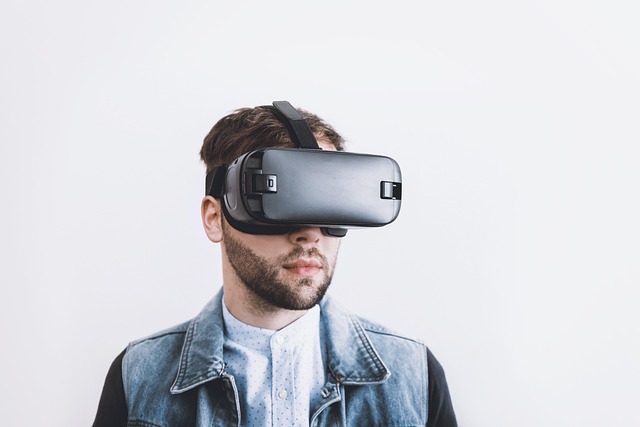
A critical insight for successful adoption is to prioritize API-first development. This ensures that AR/VR applications can pull and push data from enterprise databases, making them an extension of your existing digital infrastructure. For instance, an AR maintenance app should be able to access work order histories from an ERP system and update task completion status in real-time. This integration transforms AR/VR from a novelty into a powerful business intelligence tool.
To establish a clean integration pipeline, enterprise software architects must focus on three core layer components:
- The Spatial Rendering Layer: Runs on WebXR or native 3D engines (Unity/Unreal), responsible for rendering spatial graphics and tracking user input.
- The Middleware API Gateway: Translates high-frequency 3D coordinates, gesture triggers, and spatial telemetry into lightweight REST or WebSocket requests.
- The Enterprise Core (ERP/CRM/SCM): Receives task updates, inventory movement confirmations, or diagnostic outputs and stores them within the central database.
The Crucial Role of Data Privacy and Security
As AR/VR systems collect vast amounts of spatial, biometric, and interaction data, ensuring strong data privacy and security is paramount. This is a unique insight often overlooked in the initial excitement of adoption. Immersive technologies can capture everything from eye movements and gestures to environmental scans, raising significant privacy concerns.
Businesses must implement strong encryption, access controls, and transparent data handling policies from the outset. Compliance with regulations like GDPR and CCPA is non-negotiable, especially when dealing with customer data or sensitive internal operations. Failing to prioritize data security can lead to significant reputational damage and legal penalties, negating any benefits gained from the technology. This is particularly relevant as enterprise AR/VR deployments scale up.
Phased Adoption: A Practical Framework for AR/VR
For companies considering AR/VR, a phased adoption strategy is essential. Avoid large-scale deployments without thorough piloting. Start with a clear problem statement and a small, manageable pilot project with measurable KPIs.
Phase 1: Proof of Concept (POC) – Identify a specific pain point (e.g., complex assembly steps, remote troubleshooting) and develop a minimal viable AR/VR solution. Focus on demonstrating feasibility and gathering initial user feedback. This phase should involve a small team and limited investment.
Phase 2: Pilot Program – Expand the successful POC to a larger group or department. Refine the application based on broader feedback, measure ROI against predefined metrics (e.g., training time reduction, error rate decrease), and assess integration needs. This helps validate the business case before a full rollout.
Phase 3: Scaled Deployment – Only after successful piloting, plan for enterprise-wide deployment, including infrastructure upgrades, strong security protocols, and complete user training. Consider the long-term maintenance and evolution of the solution. This structured approach minimizes risk and maximizes the chances of achieving the desired transforming businesses with AR VR outcome.
Common Mistakes in AR/VR Implementation
Adopting AR/VR isn’t without its pitfalls. A common mistake is focusing too much on the ‘cool factor’ rather than solving a genuine business problem. This often leads to impressive but ultimately unused applications. Another error is underestimating the integration complexity with existing IT infrastructure. Many projects falter when they hit the wall of legacy systems.
Beyond that, neglecting user comfort and interface design can lead to poor adoption rates. If the hardware is clunky or the software is unintuitive, employees or customers simply won’t use it. Companies also often fail to plan for scalability, ending up with solutions that work for a few users but collapse under enterprise-wide demand. Proper planning for content creation and maintenance is also crucial; immersive content is costly to produce and requires ongoing updates.
Specific Problems and Practical Engineering Fixes
- Problem: Simulation Sickness and Ergonomic Fatigue. High latency between head movement and display rendering causes motion discomfort during extended VR sessions.
Fix: Enforce strict frame-rate standards (minimum 90 FPS), optimize 3D polygon counts, and limit high-immersion VR sessions to 20–30 minute modules. - Problem: Bandwidth Congestion During Multi-User Spatial Sessions. Streaming uncompressed 3D models and point clouds saturates corporate Wi-Fi networks.
Fix: Implement local asset caching on hardware devices, apply foveated rendering, and utilize edge computing nodes to handle spatial data processing. - Problem: High Cost of Custom 3D Asset Creation. Developing 3D models from scratch for every product variant bloats software budgets.
Fix: Build automated CAD-to-3D pipeline tools that convert existing manufacturing CAD models directly into lightweight WebXR asset bundles.
Who Should NOT Implement AR/VR (Scope Limitations)
While AR and VR offer transformative opportunities, they are not a universal solution for every organization. Implementing spatial computing without structural alignment leads to wasted capital and employee frustration.

- Low-Margin, Non-Spatial Service Models: Businesses operating on purely text-based, standard transactional workflows (such as basic call centers or simple data entry firms) gain minimal efficiency from 3D visualization.
- Strictly Air-Gapped Legacy Systems: Environments where cloud connectivity, external camera sensors, and spatial mapping are prohibited by strict defense or physical security protocols may find deployment costs prohibitive due to compliance hurdles.
- Organizations Lacking Dedicated IT Support: Small teams without internal technical resources or partner ecosystems to manage 3D pipelines, spatial device management (MDM), and regular asset updating should rely on standard SaaS applications rather than custom AR/VR builds.
Expert Insights and Best Practices for AR/VR
To truly harness the power of AR/VR, focus on the user experience. Prioritize intuitive interfaces and comfortable hardware to ensure high adoption rates. For example, ensure AR overlays are contextually relevant and not overwhelming. In my eight years working in enterprise technology, I’ve seen that the most successful deployments are those where the technology fades into the background, allowing the user to focus on the task.
Additionally, begin with clear, measurable goals. Don’t just implement AR/VR; implement it to reduce training time by X% or improve design review cycles by Y%. Engage end-users early in the development process to gather feedback and ensure the solution meets their needs. Finally, always think about scalability and future-proofing.
What happens when your user base doubles? Is your content creation pipeline sustainable? Consider open standards where possible to avoid vendor lock-in.
Frequently asked questions
What is the ROI of AR/VR for businesses?
The ROI of AR/VR varies by application but typically comes from increased efficiency, reduced training costs, fewer errors, and enhanced customer satisfaction. For instance, VR training can reduce travel expenses and improve knowledge retention, while AR can boost field service productivity by providing real-time information to technicians.
Which industries are leading in AR/VR adoption?
Manufacturing, healthcare, retail, education, and real estate are leading industries in AR/VR adoption as of 2026. Manufacturing uses AR for assembly and maintenance, healthcare for surgical training and therapy, retail for immersive shopping, education for virtual labs, and real estate for virtual property tours.
What are the main challenges of implementing AR/VR in an enterprise?
Key challenges include high upfront costs for hardware and software development, integrating new systems with existing IT infrastructure, ensuring data privacy and security, and overcoming resistance to new technologies from employees. Technical expertise for development and maintenance can also be a hurdle.
How does AR differ from VR in business applications?
AR (Augmented Reality) overlays digital information onto the real world, enhancing immediate tasks like remote assistance or on-site maintenance. VR (Virtual Reality) creates fully immersive simulated environments, ideal for training simulations, virtual design reviews, or remote collaboration without real-world distractions.
What are the future trends for AR/VR in business?
Future trends for AR/VR in business include deeper integration with AI for more intelligent interactions, advanced haptic feedback for realistic simulations, and the proliferation of lightweight, more comfortable hardware. The growth of the industrial metaverse and spatial computing will also drive more interconnected immersive business environments.
Can Small and Medium Businesses (SMBs) benefit from AR/VR?
Yes, SMBs can benefit significantly. While large-scale custom solutions might be costly, off-the-shelf AR apps for retail visualization or VR tools for basic employee onboarding are increasingly accessible. Focusing on specific, high-impact use cases can provide SMBs with a competitive edge without massive investment.
Conclusion
The journey of transforming businesses with AR VR technologies is well underway in 2026. These immersive tools are no longer futuristic concepts but essential drivers of efficiency, innovation, and competitive advantage. By strategically implementing AR/VR, addressing challenges like integration and data privacy, and focusing on measurable outcomes, organizations can unlock unprecedented value.
Embrace a phased adoption approach, prioritize user experience, and align immersive projects with clear business objectives. The next era of business success will undoubtedly be built on the foundations of these powerful, transformative technologies.